
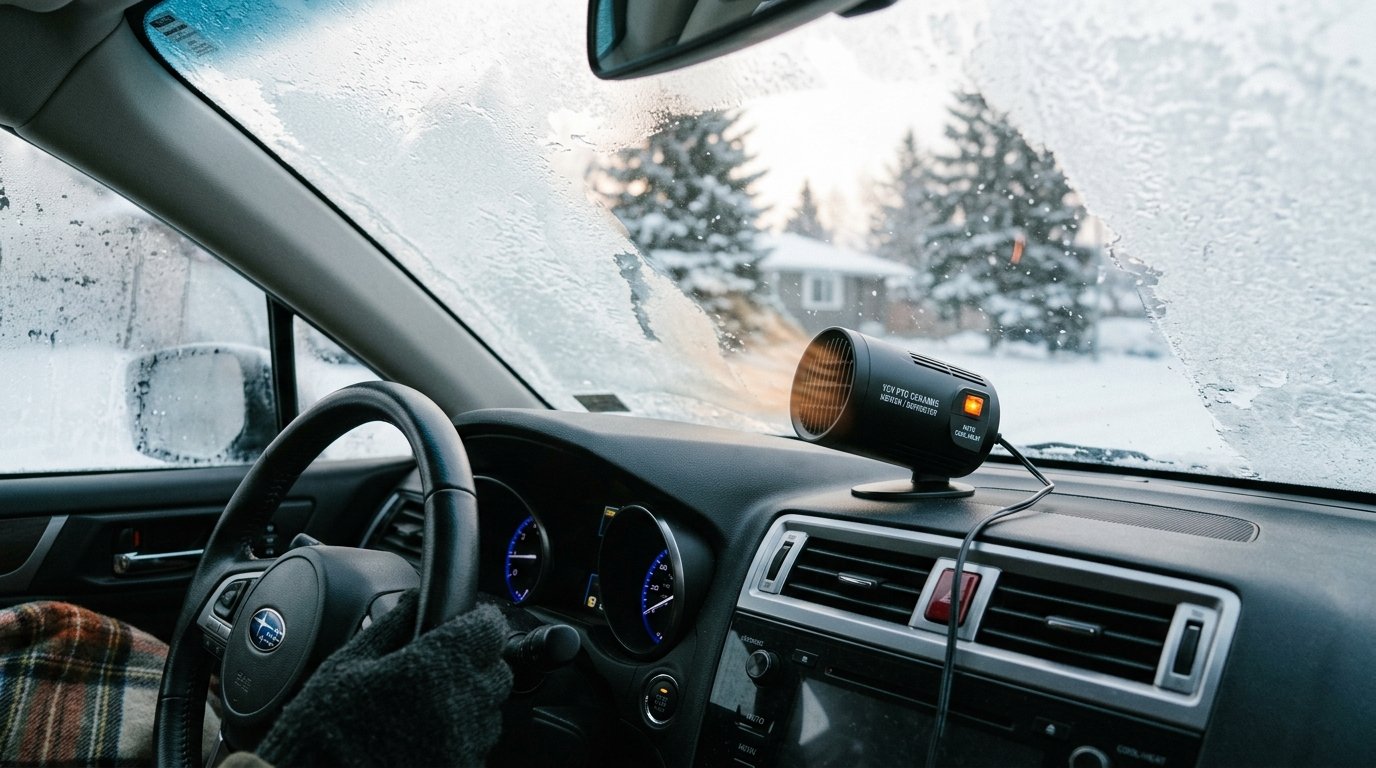
How 12V Car Defrosters & Diesel Air Heaters Work: Power Draw Amp Limitations, Rapid Frost Clearing, and Winter Warmth
Freezing winter weather challenges vehicle heating systems and causes dangerous windshield frost and condensation. This authoritative technical guide breaks down the physical limits of 12-volt DC automotive heating, ceramic Positive Temperature Coefficient (PTC) self-regulating semiconductor physics, cigarette lighter 15A fuse circuit safety, rapid windshield defogging aerodynamics, and battery alternator load management.
1. The Physics of 12-Volt Automotive Heating: Managing Real Expectations
On frigid winter mornings when temperatures drop below freezing, waiting 10 to 15 minutes for your vehicle’s engine to warm up before the factory heater core can blow hot air is uncomfortable and severely impairs safety when your windshield is caked in thick frost. Many drivers turn to portable 12-volt car heaters and plug-in defrosters hoping for instant warmth.
However, understanding the basic laws of electrical thermodynamics is essential before deploying a 12V heater in your vehicle. A standard household electric space heater plugs into a 120V AC wall outlet, consuming 1,500 Watts of electrical power (generating approximately 5,120 BTUs of thermal energy per hour). In stark contrast, a portable car heater is powered by a vehicle’s 12V DC auxiliary cigarette lighter socket, which is strictly limited by a 15-Amp fuse. According to Ohm’s Power Law:
A 150W portable heater produces exactly one-tenth the thermal heat of a household space heater! A 12V heater will never heat the entire cabin of a full-size SUV or minivan. However, when engineered with focused aerodynamic nozzles, a 150W ceramic defroster delivers targeted, high-temperature airflow directly onto a frozen windshield, melting optical frost and clearing condensation in under 60 seconds while the engine warms up.
2. Heating Element Physics: Ceramic PTC vs. Dangerous Glowing Wire Coils
How a portable heater generates heat determines whether it operates safely or presents serious in-cabin fire hazards:
- Ceramic Positive Temperature Coefficient (PTC) Elements: Quality 12V defrosters utilize specialized ceramic PTC heating semiconductor stones. PTC ceramics exhibit a unique self-regulating electrical characteristic: when cold, electrical resistance is very low, allowing maximum current to flow for instantaneous heating within 3 seconds. As the ceramic stone heats up toward its design threshold (typically around 160°F / 70°C), its internal electrical resistance spikes exponentially, automatically throttling current draw. This self-regulating behavior makes thermal runaway physically impossible, ensuring the unit never overheats even if the blower fan motor fails!
- Traditional Nichrome Wire Coils (Severe Fire Hazard): Cheap counterfeit 12V heaters use exposed glowing nichrome wire coils similar to a kitchen toaster. These coils have fixed electrical resistance, continuing to generate blistering heat regardless of airflow. If a leaf, tissue paper, or dashboard air freshener falls onto the heating grill, or if the internal fan slows down, the plastic housing quickly melts into molten flaming plastic, igniting vehicle dashboard fires! Never purchase or operate an open-coil wire car heater.

Figure 4: Technical electrical schematic and power equation analysis demonstrating 150W safe continuous limits on 15A vehicle auxiliary sockets, PTC self-regulating resistance, and thermal fuse protection.
3. Electrical Wiring Safety: The “300-Watt” Marketing Scam
Online marketplaces are flooded with fraudulent portable car heaters advertising “300 Watts” or “500 Watts” with standard cigarette lighter plugs. Operating these units is dangerous:
- The 25-Amp Overload Catastrophe: To generate 300 Watts on a 12-volt system, the device must draw: 300W divided by 12V = 25 Amps. A standard 15A vehicle cigarette lighter fuse will instantly blow with a loud pop! If an unscrupulous user replaces the blown fuse with a 30A fuse (a horrific mistake), the thin 18-gauge factory copper wires hidden behind the vehicle dashboard will overheat, melting their PVC insulation and starting an unextinguishable dashboard electrical fire.
- Inline Thermal Fuses and 16-Gauge Pure Copper Leads: Certified 150W heaters must incorporate heavy 16 AWG pure copper power cables, a built-in 15A glass or ceramic fuse inside the male cigarette lighter plug barrel, and an internal non-resettable thermal cutoff fuse rated to trigger at 185°F (85°C).
- Cigarette Lighter Socket Contact Resistance: The spring-loaded center pin and outer negative ground spring clips inside standard cigarette lighter sockets can accumulate surface oxidation. Under continuous 12.5A current draw, poor contact creates localized resistance, causing the plastic plug housing to become blistering hot. Always ensure the plug is firmly seated with zero wobble in the socket.
4. Aerodynamics of Windshield Defrosting & Moisture Evaporation
To clear frosted windshield glass rapidly, maximize aerodynamic airflow and humidity reduction:
- Focused Laminar Air Nozzles: Rather than diffusing warm air into the cabin volume, mount the defroster on the center of the dashboard facing the glass at a 30-degree upward angle. The high-velocity laminar air jet strips the boundary layer of cold air from the inner glass surface, rapidly raising the glass temperature above the dew point.
- Clearing Frost vs. Defogging Condensation: Frost on the outside of the glass requires thermal conduction through the laminated safety glass to melt the ice bond. Condensation on the inside of the glass requires dry air to evaporate moisture. Cracking the vehicle side window open by half an inch creates a low-pressure draft that exhausts high-humidity exhaled passenger breath out of the cabin, accelerating defogging by 50%.
5. Battery Protection: Never Run on a Parked, Turned-Off Engine
Protecting your vehicle’s starting battery from rapid parasitic exhaustion during freezing conditions:
- Continuous 12.5A Battery Drain: Operating a 150W heater with the car engine turned off draws 12.5 amps directly from the battery. In sub-freezing 20°F (-7°C) weather, a cold lead-acid car battery already loses 40% to 50% of its cranking amperage capacity. Running a portable heater for just 15 minutes on a parked engine will drain the battery past its cranking threshold, leaving you completely stranded with an engine that clicks and refuses to start!
- Mandatory Operating Rule: Never turn on a 12V portable car heater unless the vehicle engine is actively running and the alternator is spinning, supplying clean 14.4V charging current.
6. Windshield Thermal Shock & Stress Fracture Prevention
When using a portable 12V defroster on severely frozen windshield glass, understanding thermal expansion dynamics prevents costly windshield replacements:
- The Physics of Thermal Shock: Modern vehicle windshields consist of laminated safety glass. If outside ambient temperatures are 0°F (-18°C) and you focus a concentrated blast of 140°F hot air directly onto a single localized spot of freezing glass, the intense differential thermal expansion causes the inner glass pane to expand rapidly while the outer pane remains frozen. If your windshield has an existing microscopic rock pit or edge chip, this thermal shock will instantly cause the rock chip to crack across the entire width of the glass!
- Sweeping Airflow Protocol: Never point the heater nozzle stationary at a single spot on the glass. Use the defroster’s swivel ball mount to sweep the warm airflow continuously back and forth across the lower windshield surface, gently and evenly raising the glass temperature to melt ice without inducing thermal stress fractures.
7. Conductive Heated Seat Cushions vs. Convective Air Heaters
If personal driver warmth is your primary goal rather than windshield clearing, thermodynamic efficiency strongly favors conductive heating:
- Convective Space Heating Inefficiency: Heating the cold ambient air inside a vehicle cabin using a 150W heater is inherently inefficient because cold vehicle sheet metal and uninsulated glass windows rapidly siphon away thermal energy through convective draft cooling.
- Conductive 45W 12V Heated Cushions: In contrast, a 12V plug-in heated seat cushion consumes only 45 Watts of power (less than 4 Amps). Because thermal energy transfers directly via physical conduction into the driver’s body without losing heat to the air, a heated cushion provides soothing warmth to your back and seat within 60 seconds, using one-third the electrical current of a 150W air blower!
8. Frequently Asked Questions (FAQ)
Can a 12V portable heater replace a broken factory heater core?
No. A vehicle’s factory automotive heater core utilizes hot engine coolant circulating at 195°F (90°C), delivering massive thermal output between 10,000 to 20,000 BTUs per hour (equivalent to 3,000 to 6,000 Watts). A 150-watt plug-in defroster is strictly an auxiliary spot-defroster designed to clear windshield driver sightlines; it does not possess sufficient thermal energy to heat an entire freezing vehicle cabin during sub-zero winter commutes.
Why does my 12V heater plug smell like warm plastic during use?
Drawing continuous 12.5 amps through a cigarette lighter socket pushes the socket to its absolute mechanical and thermal limits. Slight contact resistance between the male plug tip and socket contacts naturally creates heat. If the plug becomes hot enough to soften plastic or emits a sharp electrical burning odor, the socket contacts are loose or oxidized. Immediately disconnect the unit, clean the interior socket metal with a wire brush, and ensure a tight mechanical connection.
Top 5 Best Portable 12V Car Heaters & Defrosters Tested
Compare lab thermal imaging heat output, ceramic PTC warm-up speeds, 15A fuse continuous safety, windshield frost melting times, and cabin blower CFM flow rates across top models.
DriveGear Lab thermal automotive testing complies with SAE J2234 thermal environmental testing guidelines and UL 2021 fixed and location-dedicated electric room heater safety specifications.


One Comment